
-
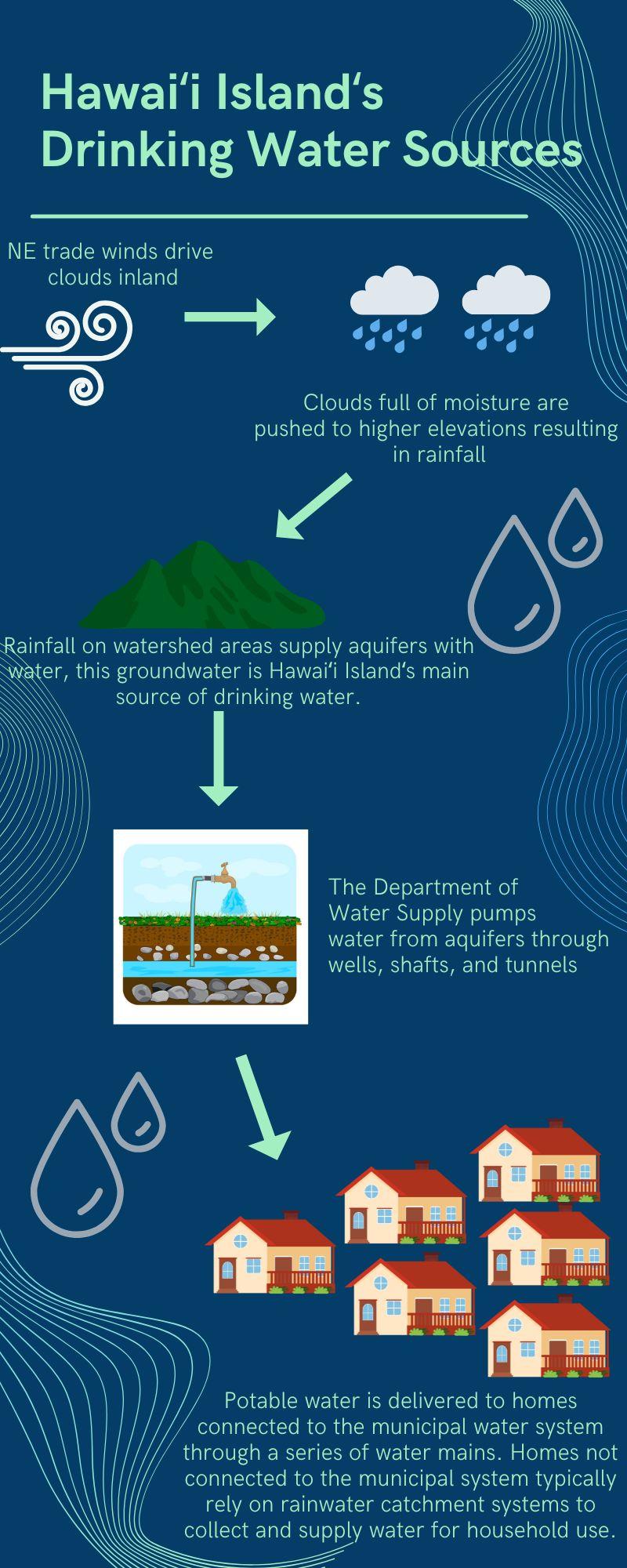
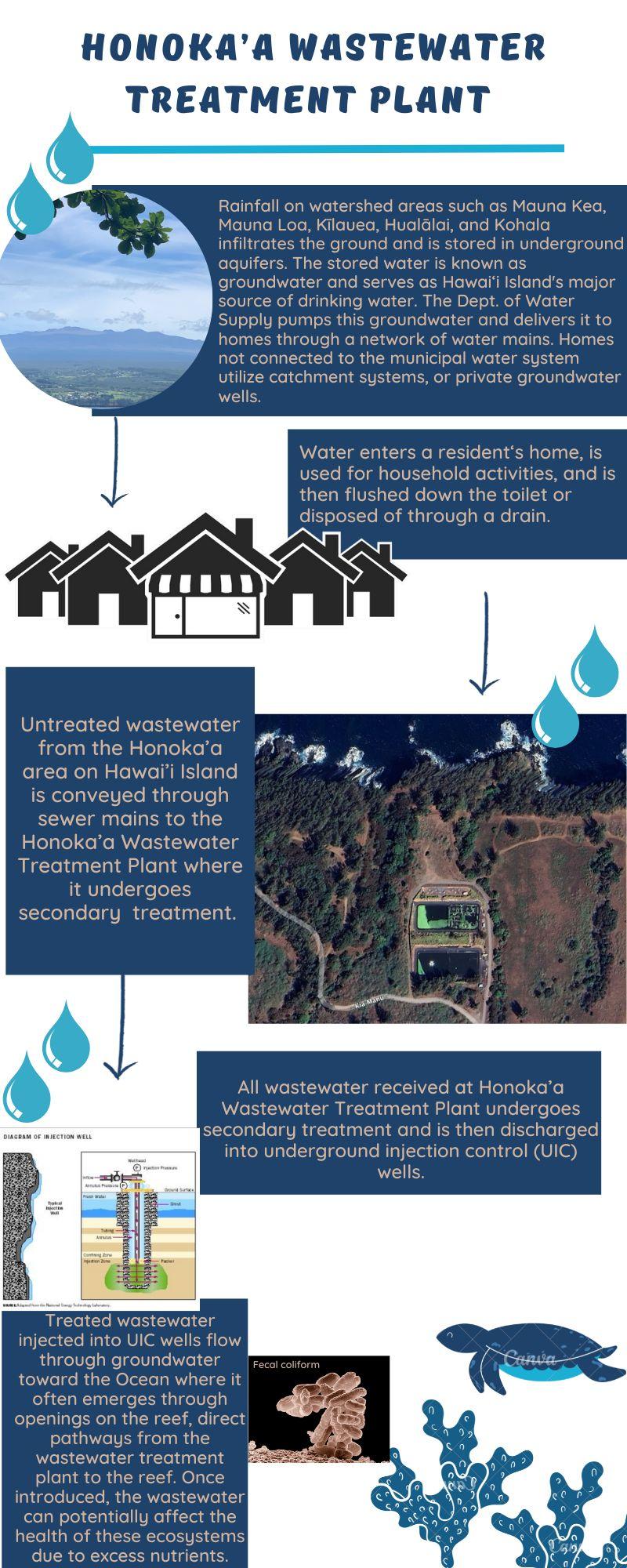
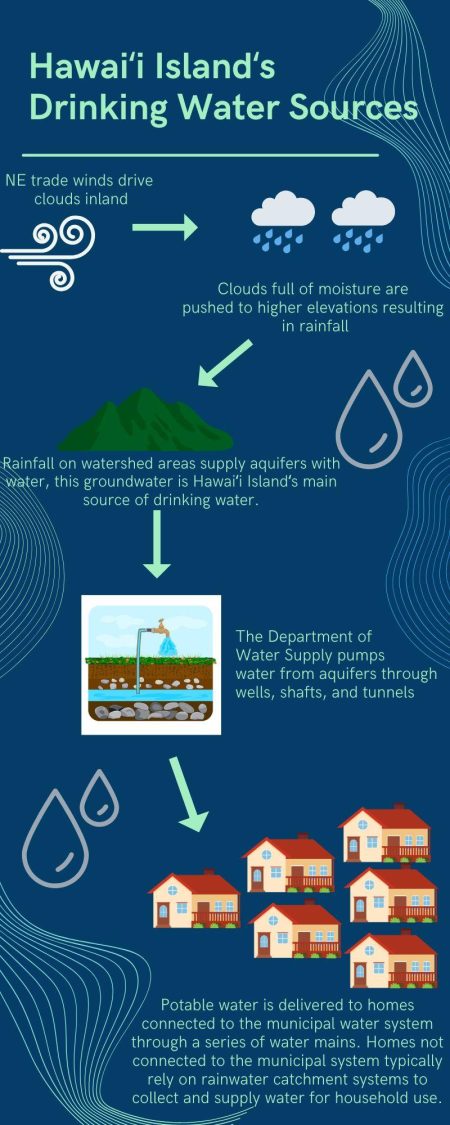
Rainfall on watershed areas such as Mauna Kea, Mauna Loa, Kīlauea, Hualālai, and Kohala infiltrates the ground and is stored in underground aquifers. Dept. of Water Supply pumps this groundwater and delivers it to homes through a network of water mains where it is used for household activities and then disposed of through toilets or drains. Homes not connected to the municipal water system rely on rainwater catchment systems, or private groundwater wells, to collect and supply water for household use.
-
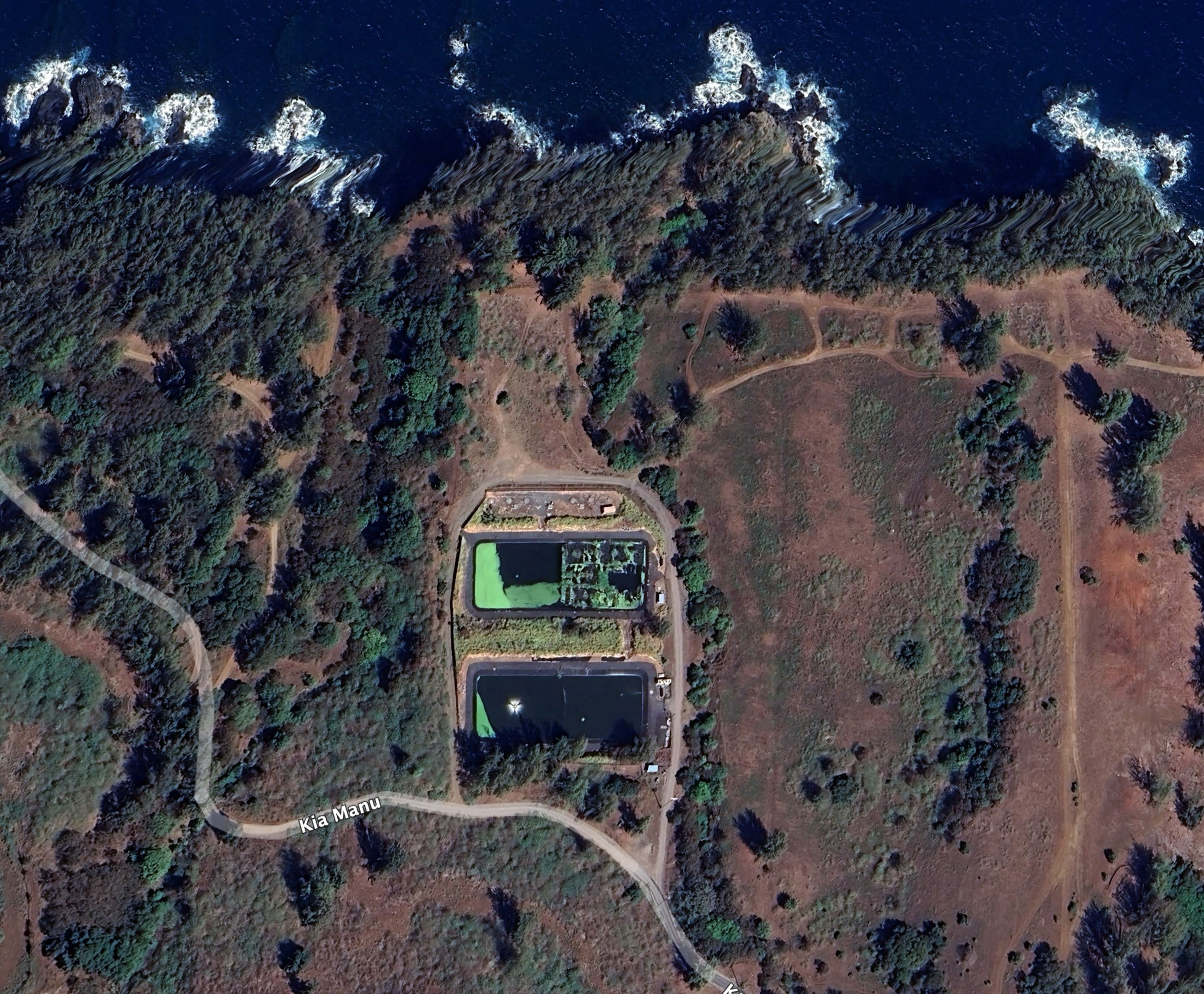
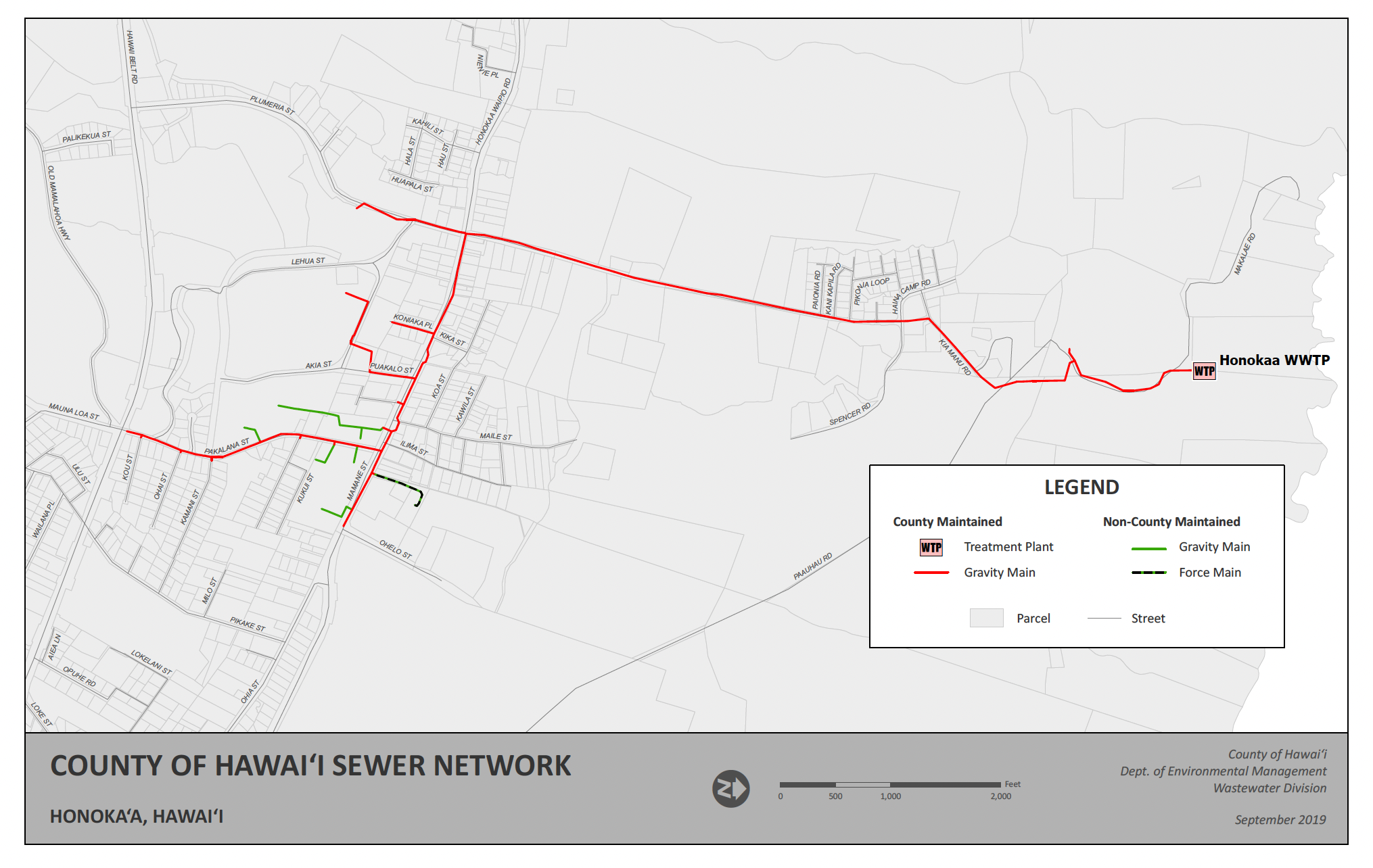
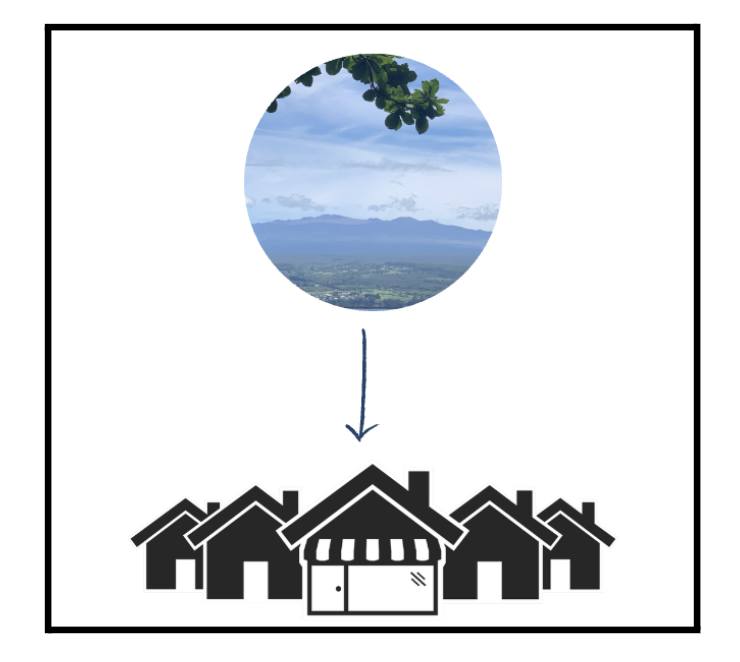
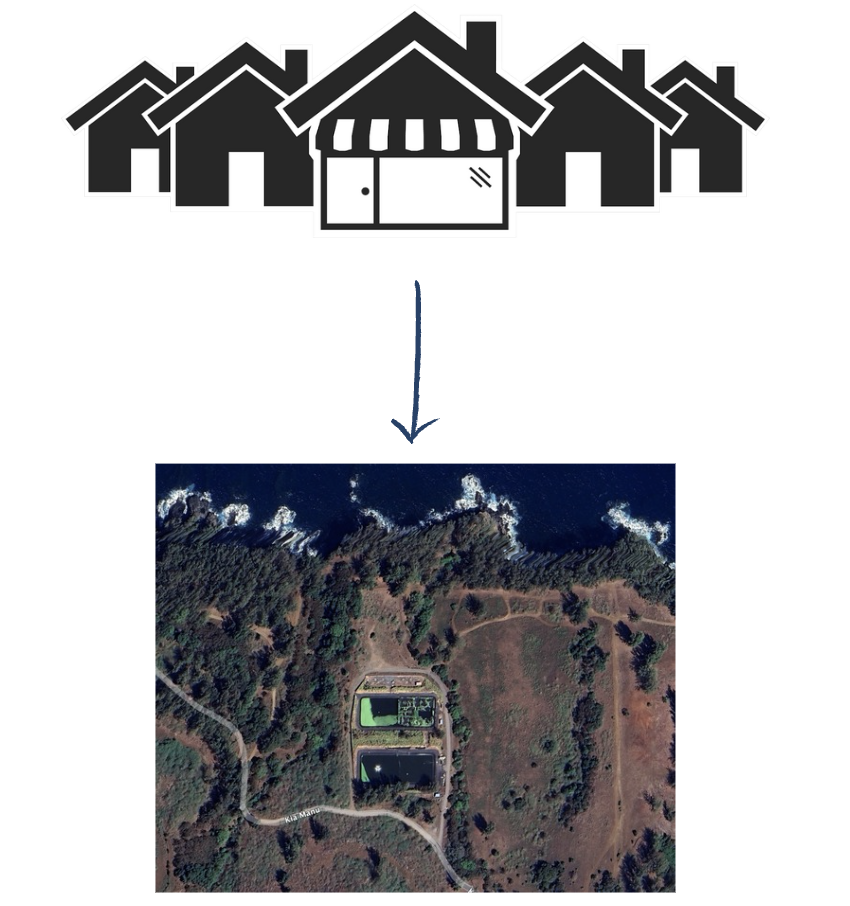
Untreated wastewater from the Honokaʻa area on Hawai’i Island is conveyed through sewer mains to the Honokaʻa Wastewater Treatment Plant, where it undergoes secondary treatment.
-
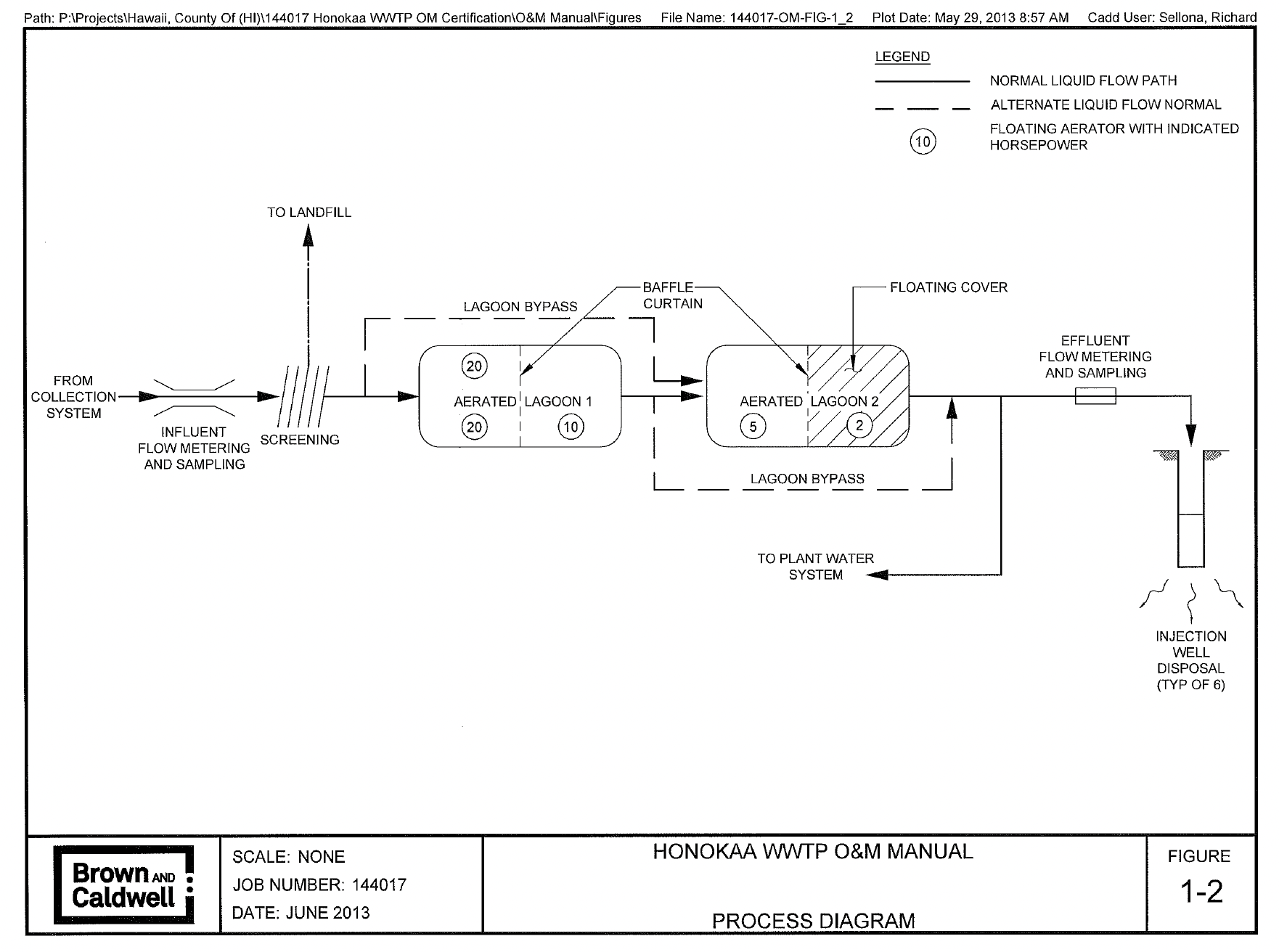
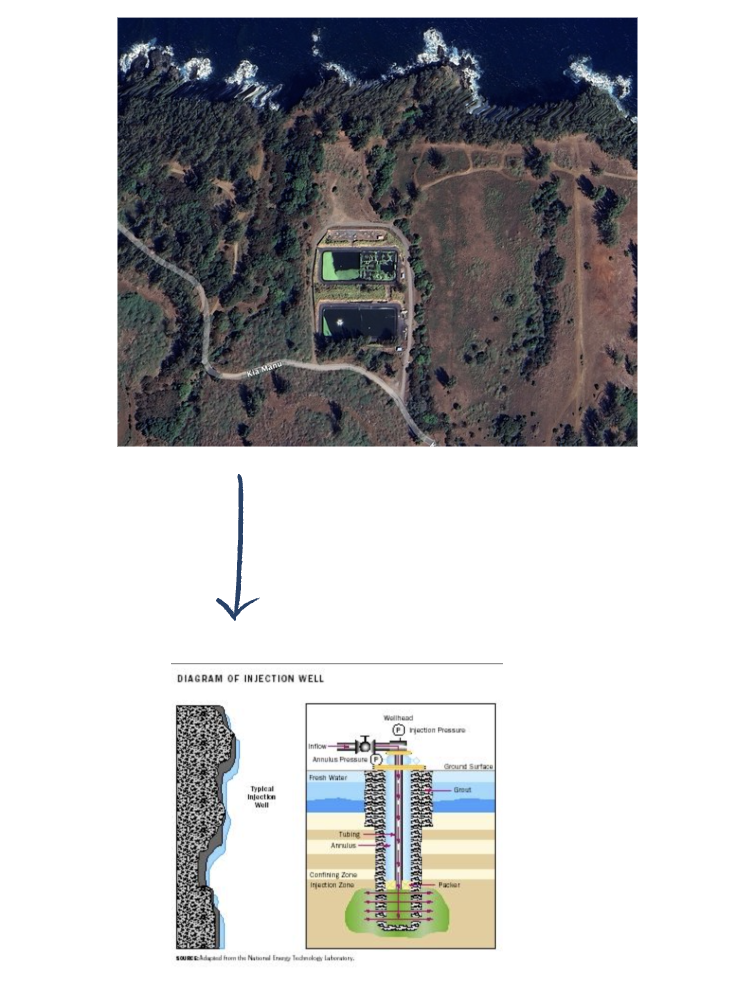
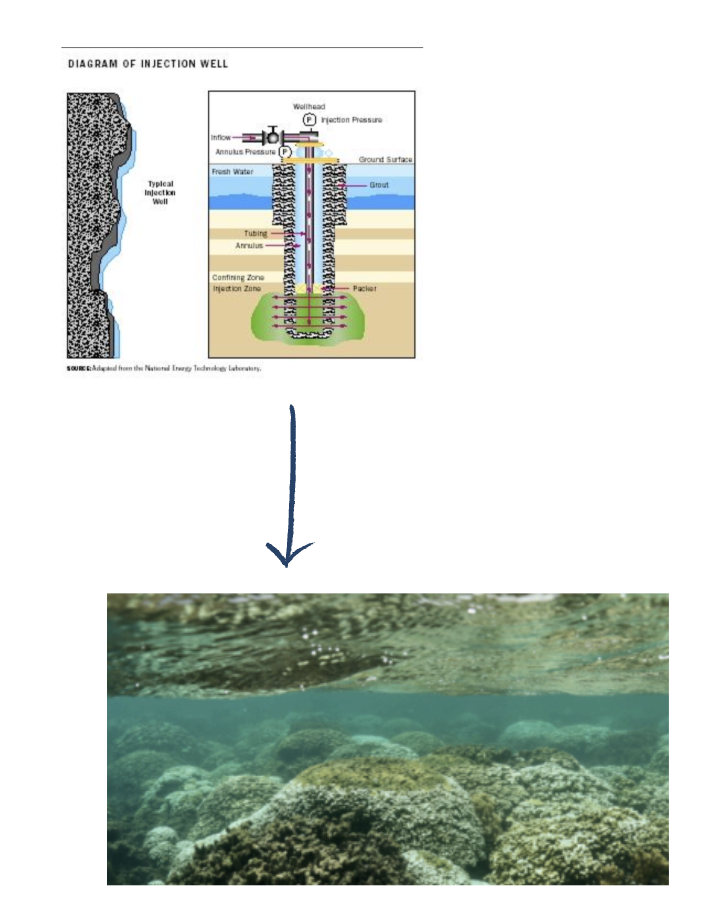
All wastewater received at the Honokaʻa Wastewater Treatment Facility undergoes secondary treatment before disposal. The treated effluent is then discharged into underground injection control (UIC) wells.
-
Treated wastewater injected into UIC wells flow through groundwater toward the ocean where it often emerges through openings on the reef, direct pathways from the wastewater treatment plant to the reef. Once introduced, the wastewater can mix with the seawater and potentially affect the health of these reef ecosystems (Lapointe 1997, Sutherland et al. 2010, Redding et al. 2013, Vega Thurber et al. 2014, Prouty et al. 2017).
-
Hawai‘i Island's Drinking Water Sources
Hawaiʻi Island relies primarily on underground water sources for drinking water, which are all dependent on a combination of natural factors: northeast trades, high mountain ranges, and the island’s geological landscape. The NE tradewinds drive clouds filled with moisture inland, the mountain ranges (Mauna Kea, Mauna Loa, Kīlauea, Hualālai, and Kohala) capture and force moisture-filled clouds to higher elevations which result in rainfall on watershed areas. Hawaiʻi Islands volcanic landscape serves as a natural filter and underground storage system of water. Rainwater percolates into the earth, naturally filtered by porous volcanic rock, and stored in aquifers. The aquifers are an underground freshwater reservoir storage from which the Department of Water Supply sources water to deliver to homes. Water is pumped from a network of shafts, water tunnels, and many wells then conveyed to homes through mains, booster systems and reservoirs. Homes / areas that do not have access to the municipal water system rely on rainwater catchment systems or private groundwater wells to collect and supply water for household use.
- Honoka‘a WWTP Facility
Do You Know What Happens After You Flush?
- Honoka‘a WWTP Facility